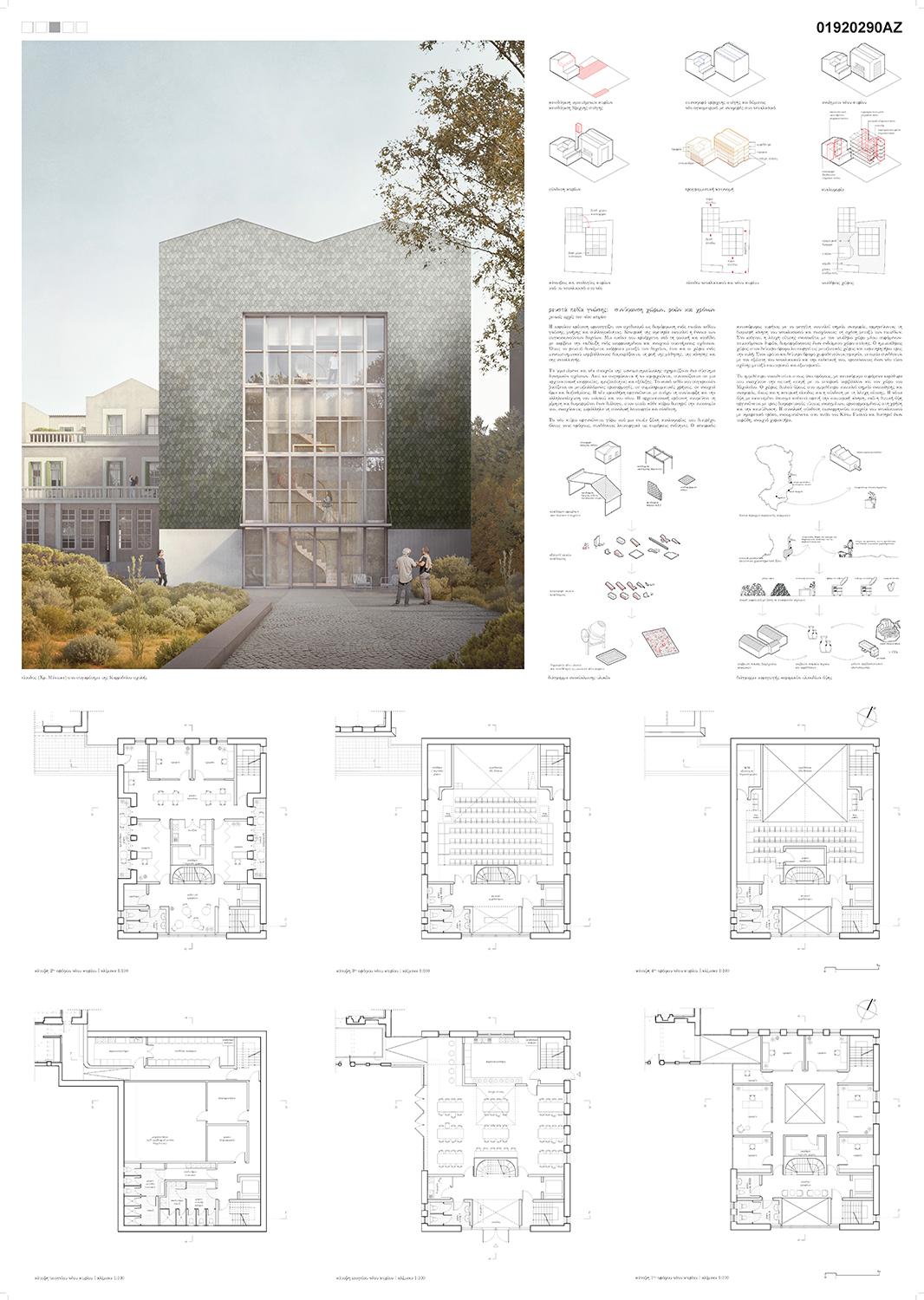
The proposal for the restoration and extension of the neoclassical building of the Karradeios School in Chios resonates with a natural philosophy that approaches design as the shaping of a unified, flowing field of knowledge, memory, and collectivity. Inspired by the idea of a “cultural structure” – those timeless spatial relationships that make a place unique – the approach recognises the historic building as a participant in the continuous flow and renewal of local tradition. The metaphor of “communicating vessels” precisely resembles this pursuit: an open system in which knowledge, as a fluid, is distributed equally, bringing the past into a creative dialogue with the present and future.
Core Principles and Goals
The proposal focuses on the symbiosis of old and new, utilising the instrument of mimesis as a means for architectural dialogue. Here, mimesis is not understood as faithful copying of the old, but as a mechanism for identifying those immutable architectural elements that, through an abstract process, can be integrated into the new expression of the Karradeios extension. Existing and new elements are coordinated into an architecture of tempering, reciprocity, and evolution. Spaces are designed as an open and porous system, where knowledge is not confined to enclosed rooms but diffuses into corridors, passageways, and outdoor areas, encouraging chance encounters and exchanges.
The neoclassical building, as an authentic example of the characteristic “Chian urban residence” with influences from Smyrna, is considered a point of reception and public presence. Its restoration follows the principles of integrated conservation, respecting its historical identity while redefining it as an active public space in the daily life of the University of the Aegean.
The new extension emerges as a continuation and evolution of this framework, forming a space that functions as a medium for physical, social, and spiritual cultivation.
Interaction and Connection Between Old and New
The relationship between the two buildings is implemented through multiple strategies:
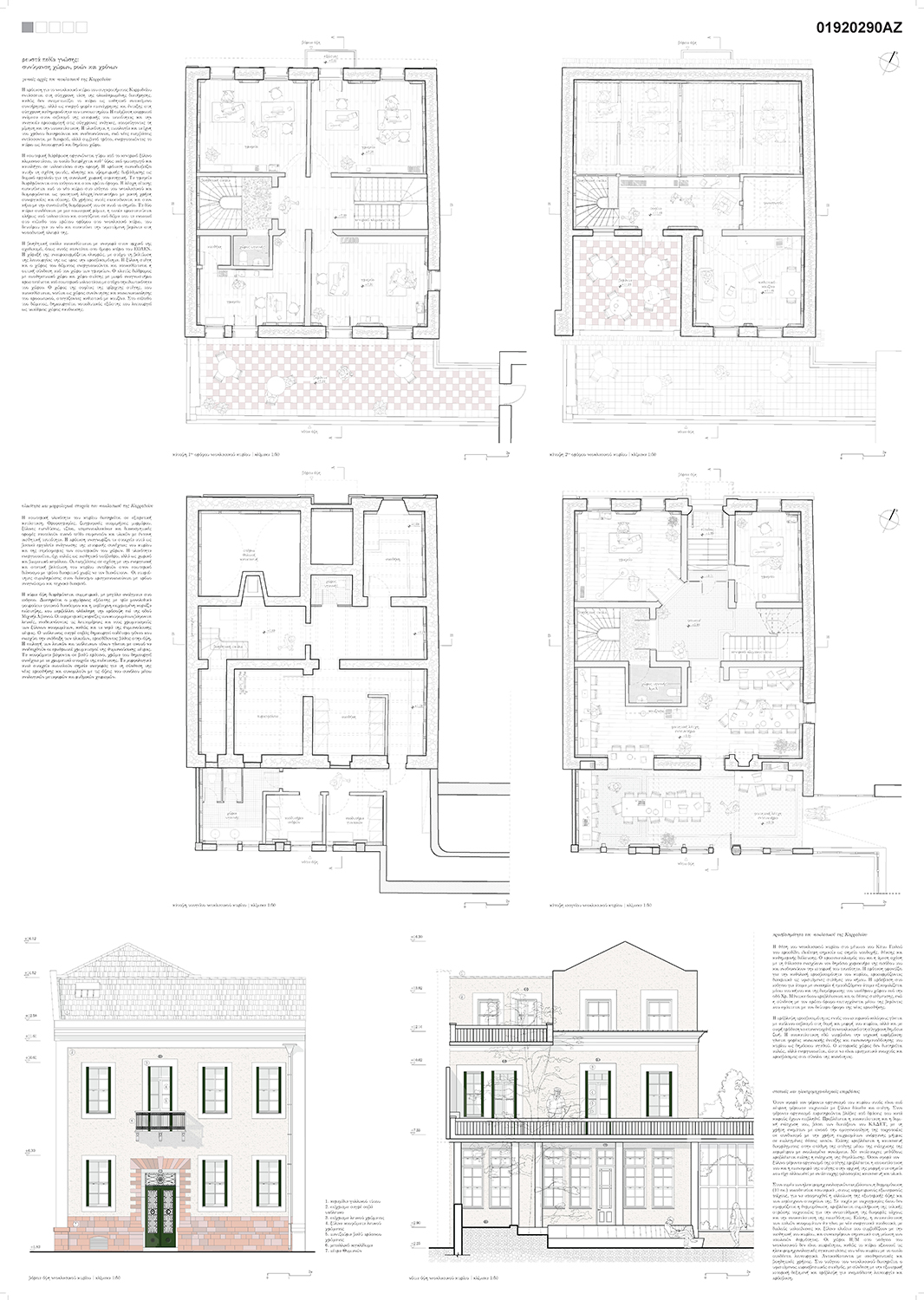
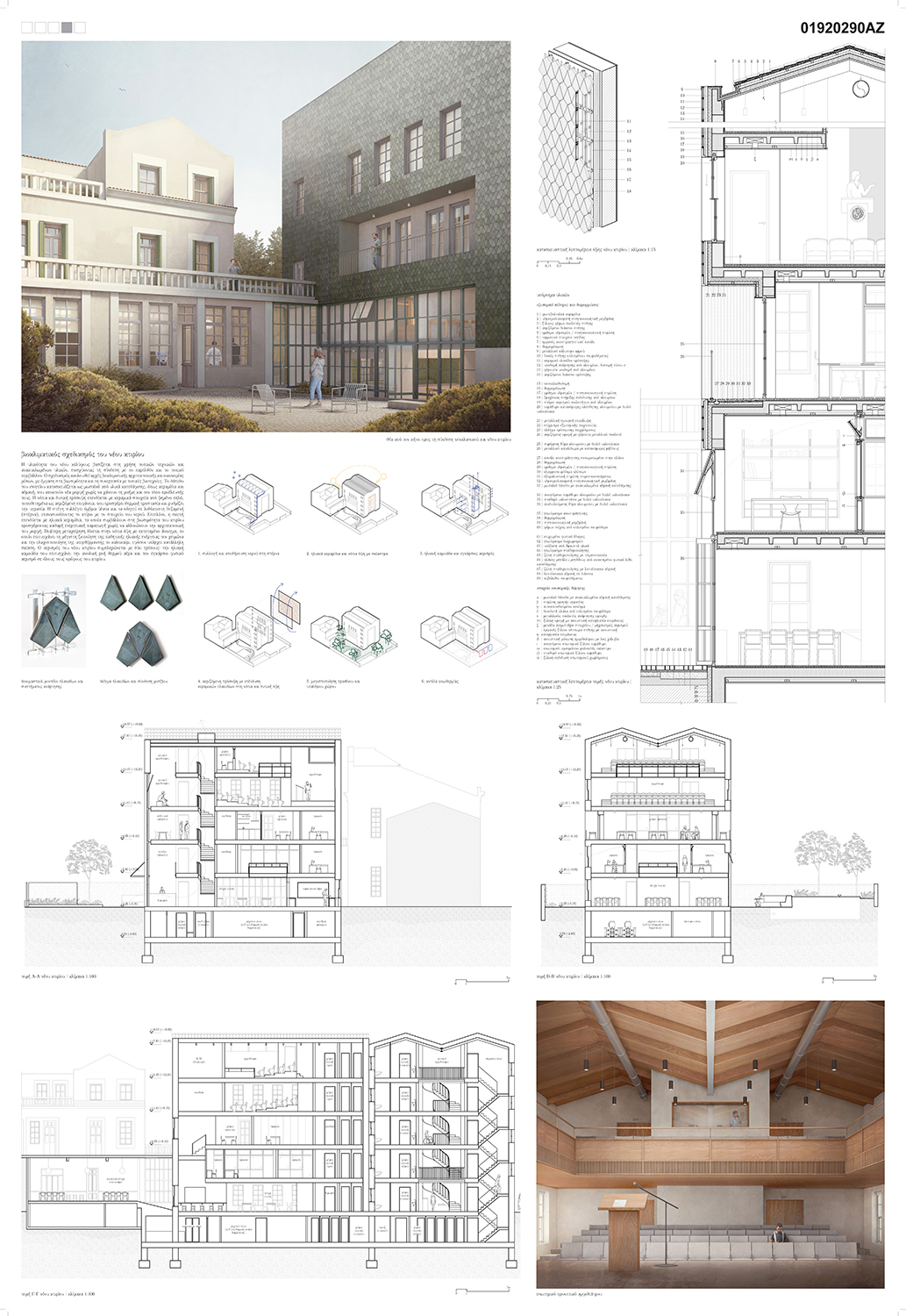
Physical and Functional Connection: The two buildings are connected by an internal ramp protected by a continuous glass screen and a covered bridge (terrace) that joins them at the first-floor level. This creates a functional continuity, allowing, for example, the student club to extend from the new building to the ground floor of the neoclassical one (community space). The basement forms a unified core of mechanical services and auxiliary spaces.
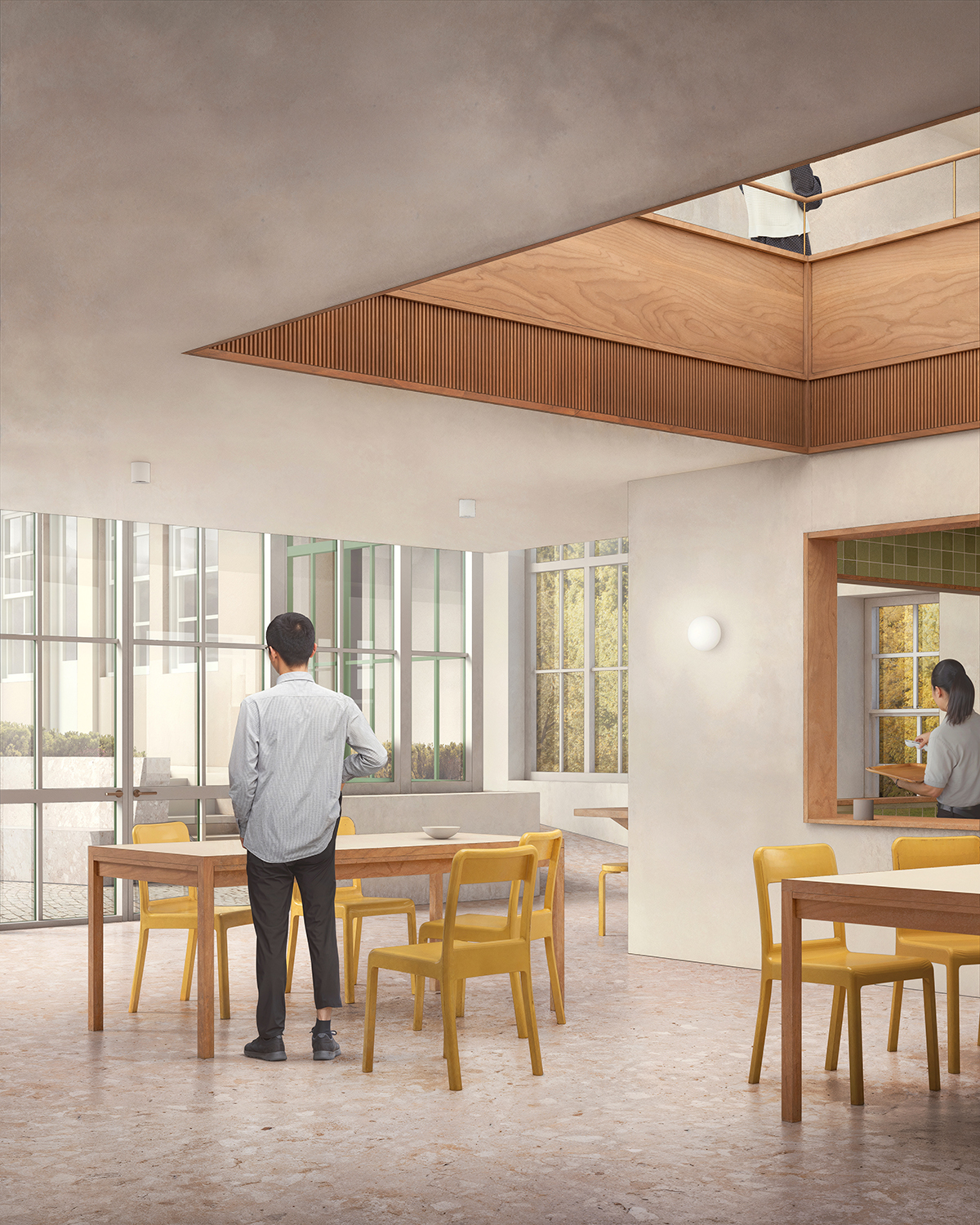
Programmatic Interaction: The proposal’s structure reinforces the relationship of continuity. The community space in the neoclassical building directly communicates with the dining hall in the new one. The offices on the second floor of both buildings are connected via the existing terrace and its extension. The uses are mutually augmented, creating a unified functional whole.
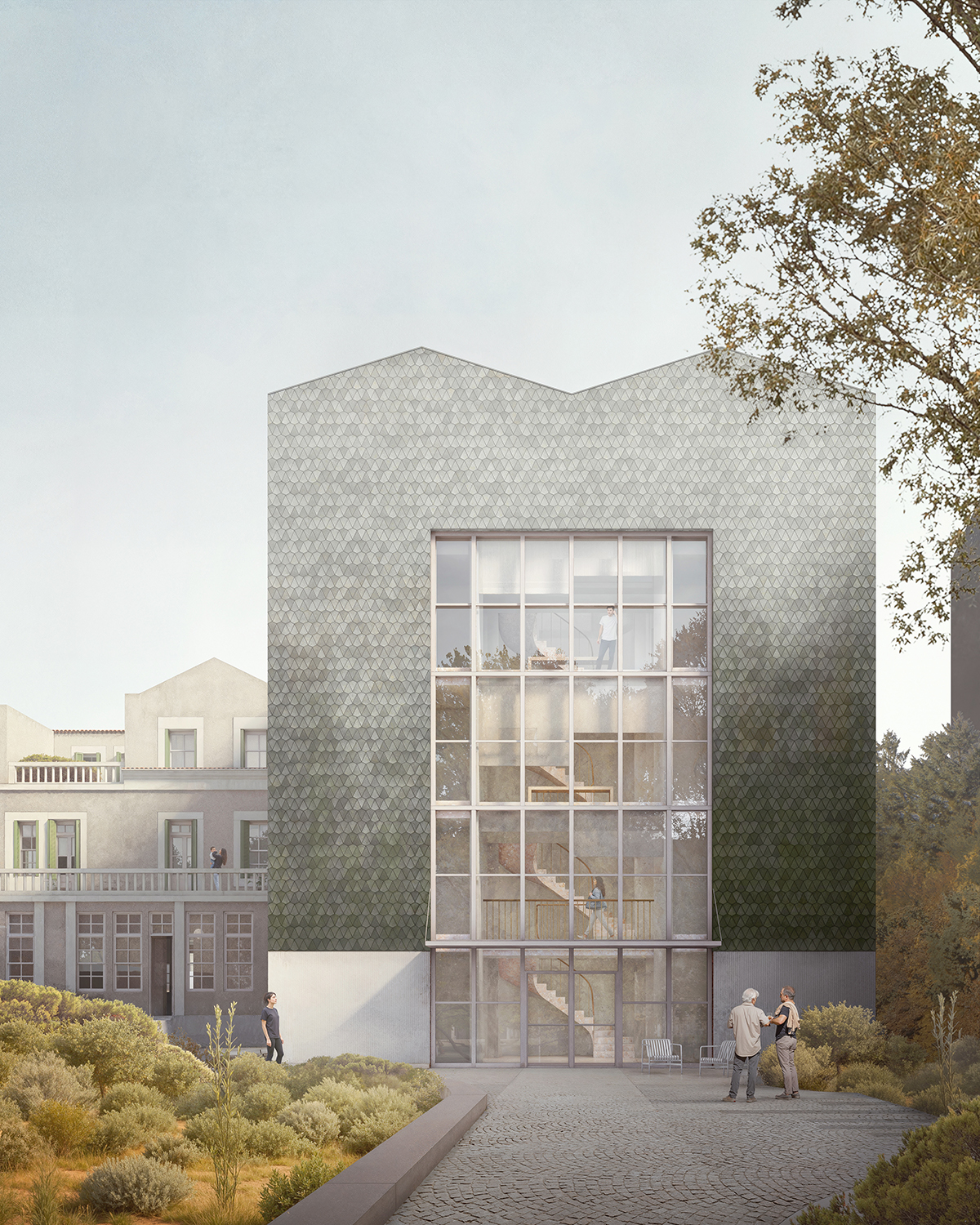
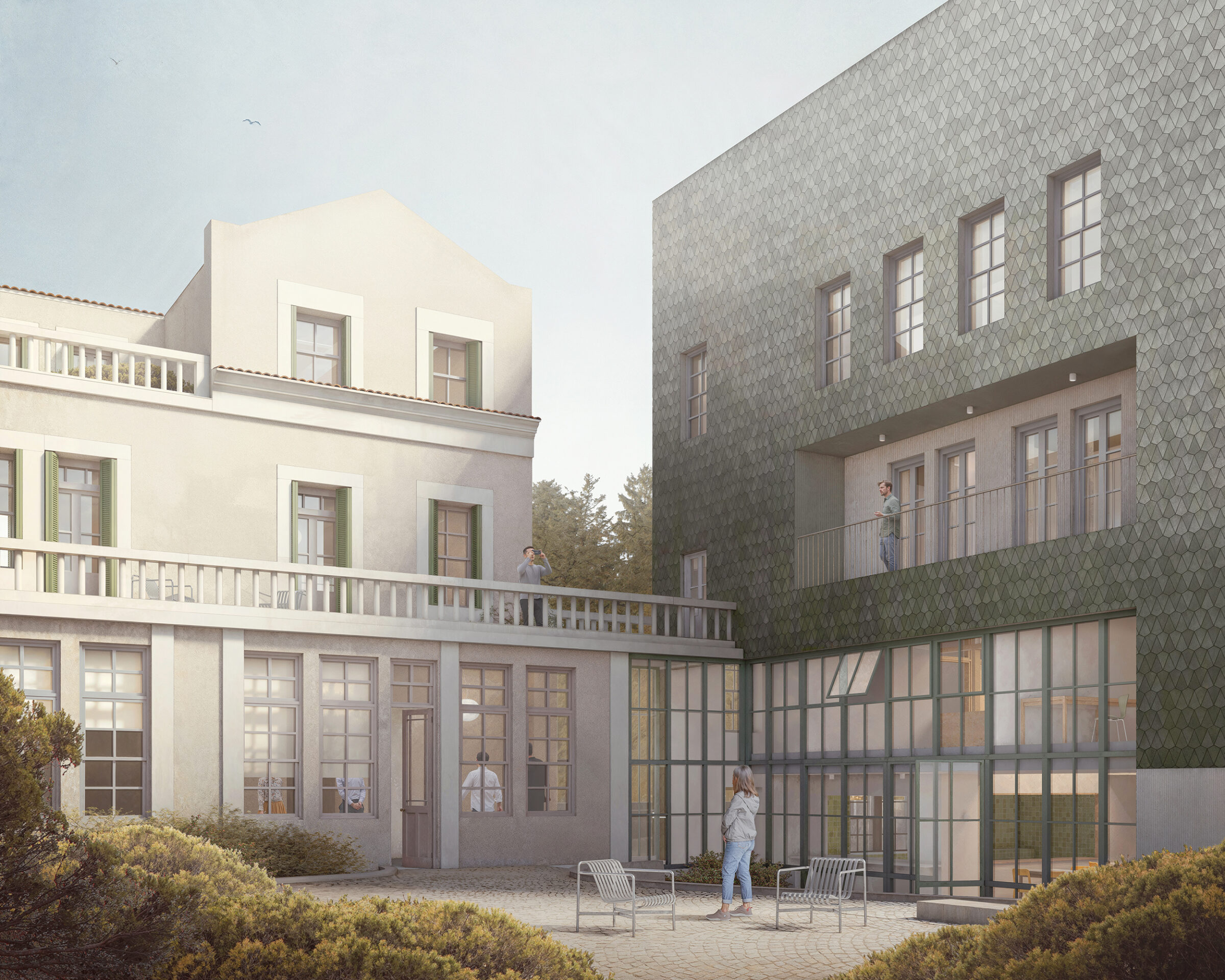
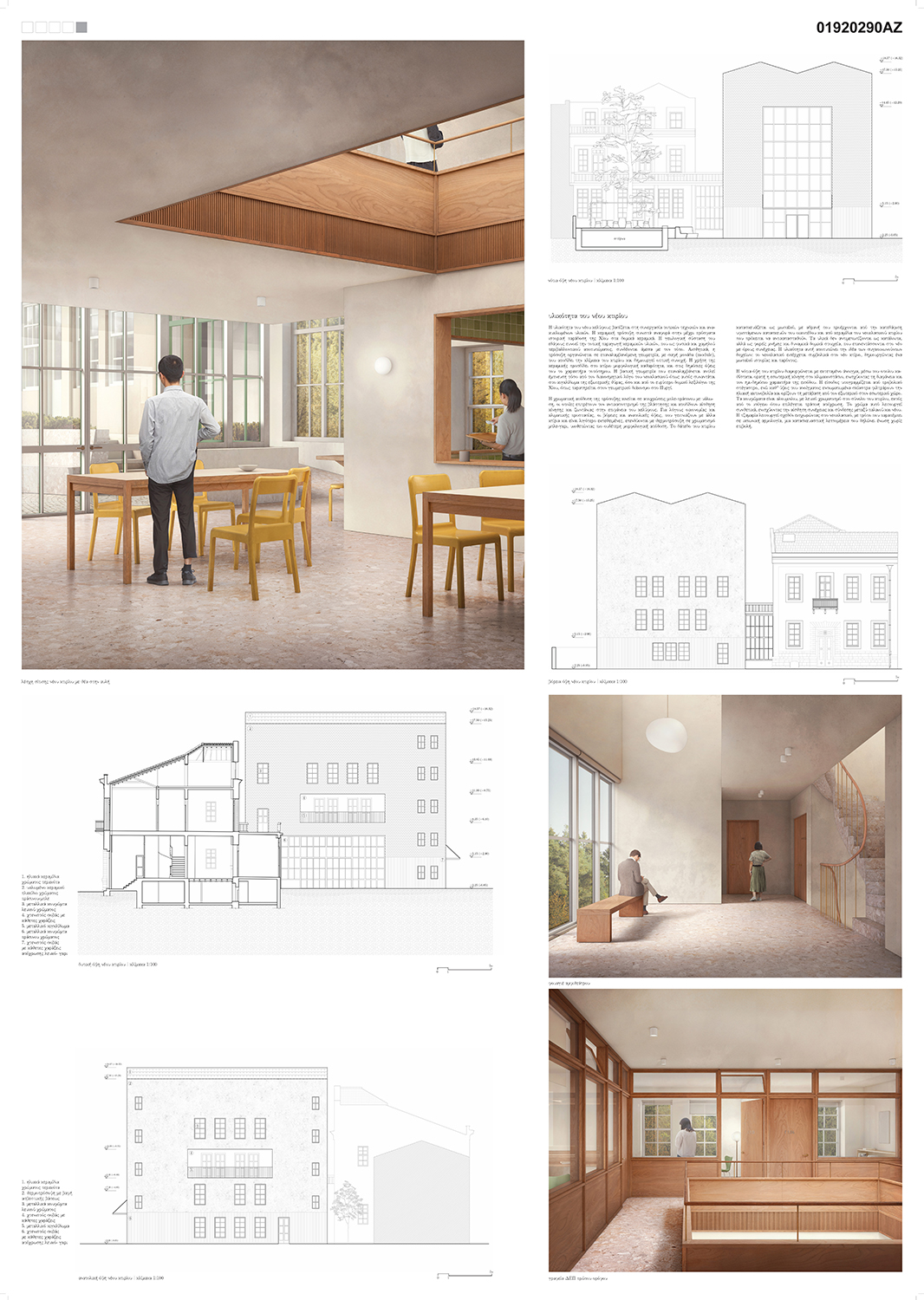
Design Dialogue: With its monolithic form, the extension respects the polyphony of the urban environment and simultaneously establishes a relationship of morphological continuity with the neoclassical building, through the abstract reinterpretation of its basic geometric and proportional principles. The extension does not attempt a linguistic imitation but seeks to recognise and harmonise with the “cultural structure” of the place. This structure is located in the deep, non-linear spatial relationships of the neoclassical building and its morphological principles that narrate a way of life.
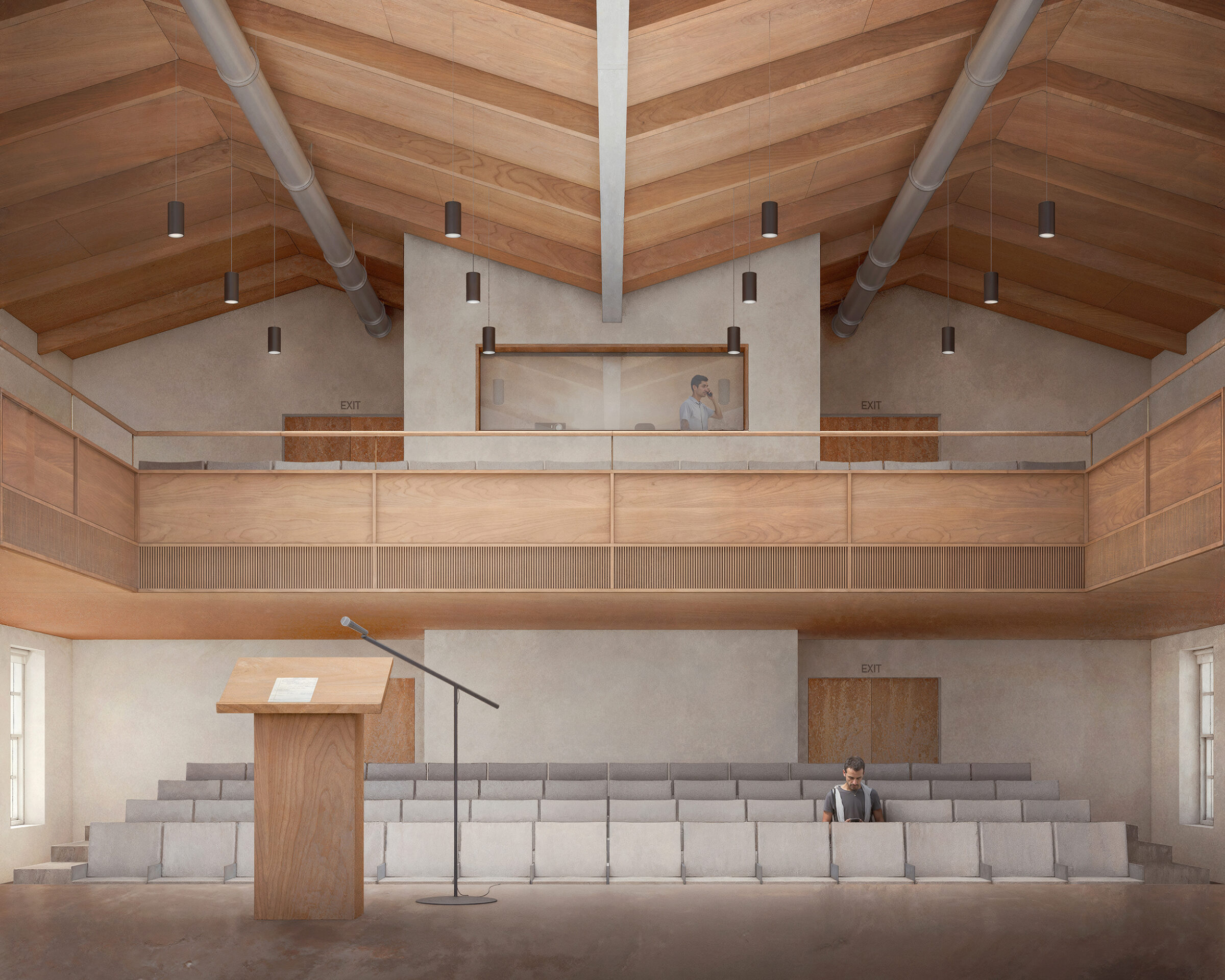
The geometric system of the nine squares in the old building’s floor plan is used as a structural tool for composing the new one, extended and rotated to create new geometries. Morphological elements (balconies, semi-outdoor spaces) reappear in an abstract way. The double-pitched roof of the new building, beyond reducing the mass of its facade, is rooted in morphological tradition and creates a contemporary landmark connected to history. The contemporary reinterpretation of these elements aims at “weaving a cultural continuity capable of encompassing contrasting” expressions, creating a dialogue that surpasses the lifespan of a human being.
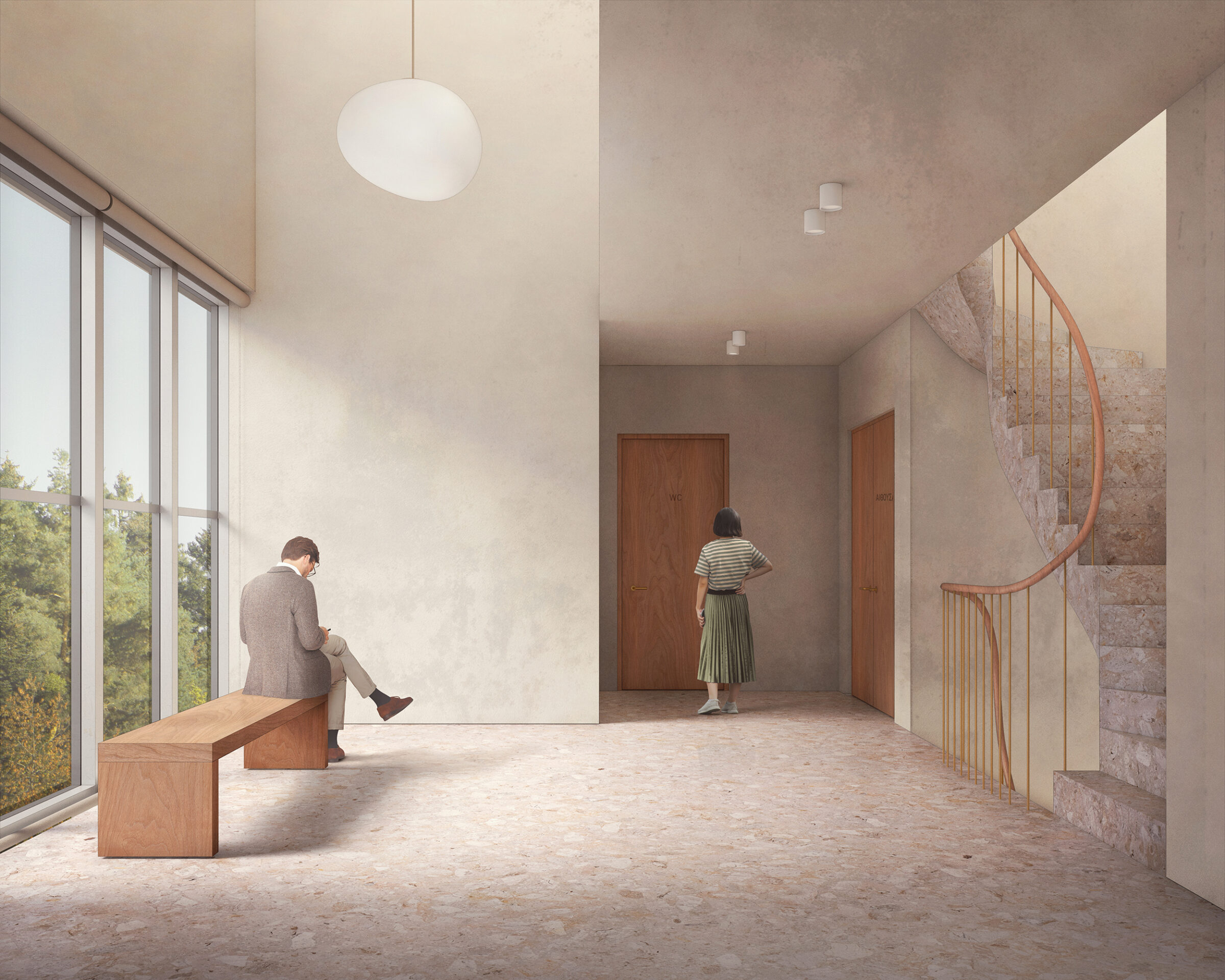
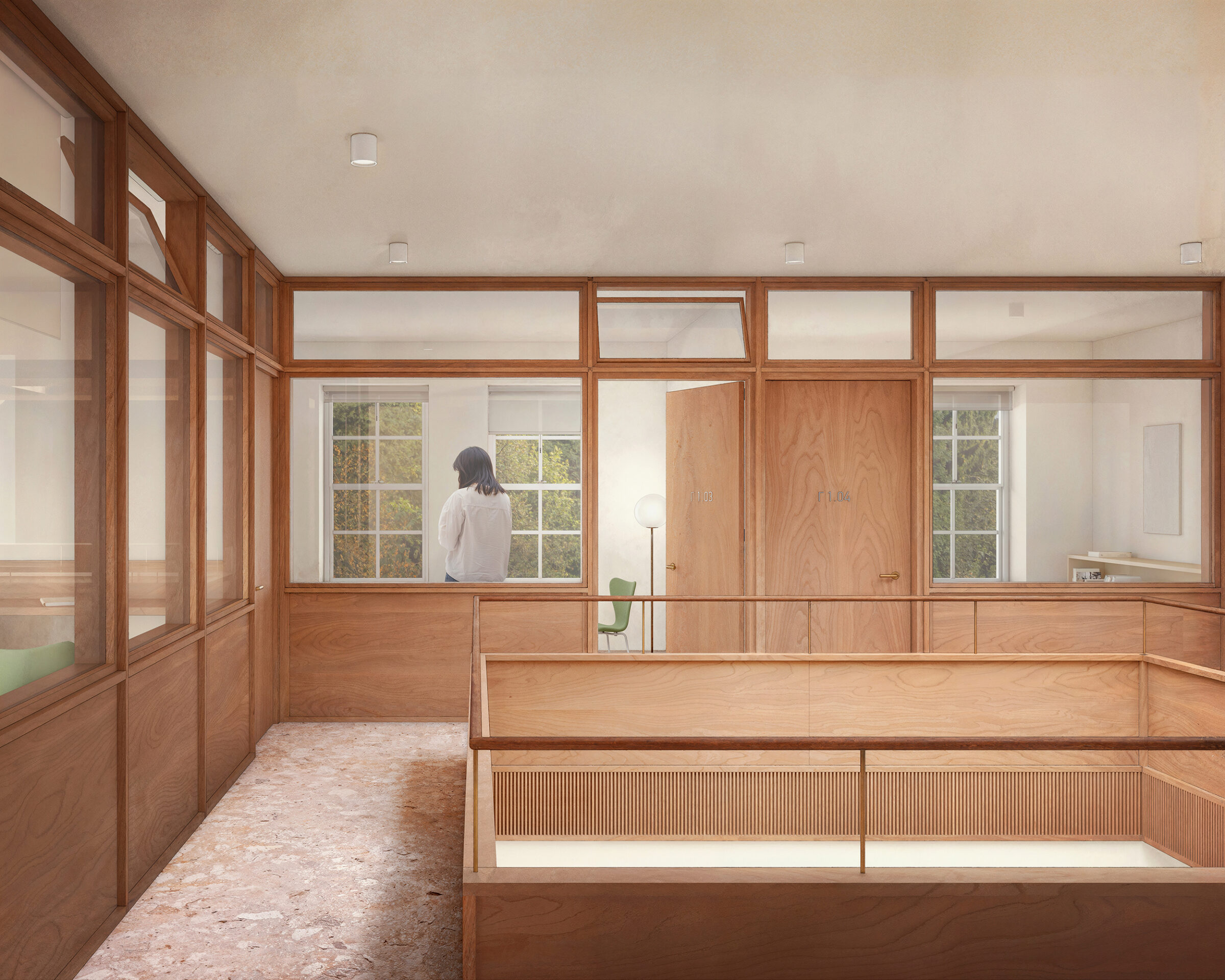
Material Dialogue & Memory: While the neoclassical building is restored with respect for its existing materiality (wooden paneling, murals, fireplace), the materiality of the extension is inspired by local tradition without copying it. The main facade is clad with locally produced ceramic tiles, referencing the production of structural ceramics on Chios. The floor of the new building will be a mosaic of aggregates and roof tiles sourced from demolished elements on the site and from the old building, symbolically integrating the memory of the old into the new, practically realising the idea of “communicating vessels.”
Visual Connections and Transparency: Large openings, especially on the southern facade of the new building and the transparent glass screen of the connection, ensure visual contact and continuity between the buildings and with the garden. The amphitheatre on the top floor of the new building offers views towards the neoclassical building, the Michaleio building, and the university campus, enhancing the semantic connection.
The Role of the Garden and Outdoor Space
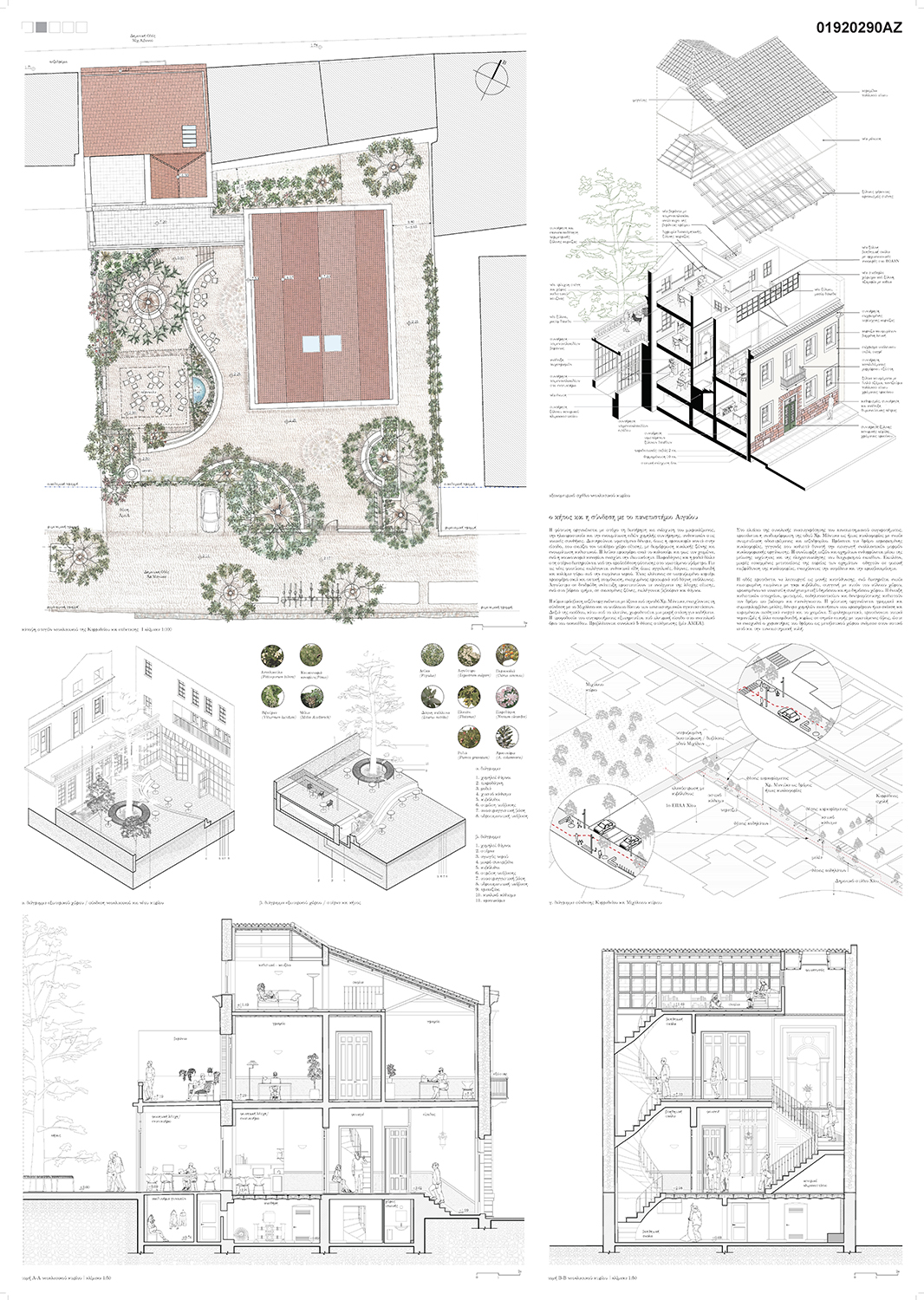
The outdoor space constitutes the unified connective tissue of the complex and realises the core natural philosophy as a medium for cultivating community and place. It is shaped as a garden that:
Functionally connects all buildings with distinct pathways and universally accessible ramps.
Preserves the maximum possible percentage of greenery, decisively influencing the morphology of the new extension (vertical development for minimal ground coverage).
Reactivates water elements (well, historic cistern, stream) as a triple water trace that improves the microclimate and brings back the memory of the place.
Planting is designed with bioclimatic goals (shading, natural ventilation channels, evapotranspiration) and respect for existing trees (e.g., araucaria providing natural shade), enhancing the integration of humans into nature.
Overall, the proposal transcends functional upgrade, proposing a poetic spatial experience. The design interprets the role of the architect as a weaver of narratives within the framework of the flowing cultural stream. By preserving, redefining, and integrating historical memory into contemporary public life, it aims to create a living metabolic ecosystem. Here, architecture functions as a medium for social, spiritual, and ecological cultivation, materially embodying the timeless metaphor of “communicating vessels” where knowledge, as a fluid, sustains and renews the very “cultural structure” that hosts it.
Design team: Angeliki Giannisi, Stella Rossikopoulou Pappa, Sofia Xanthakou, Dimitra Vasiliadou
Visuals: Axson Office
Competition Organizer: University of the Aegean